Practical workbook in Moroccan Darija
Understand your panic attacks and stop fearing the next one
A 15-chapter workbook and a 6-week practice program based on CBT and ACT, by Nadia El Amrani, licensed psychologist.
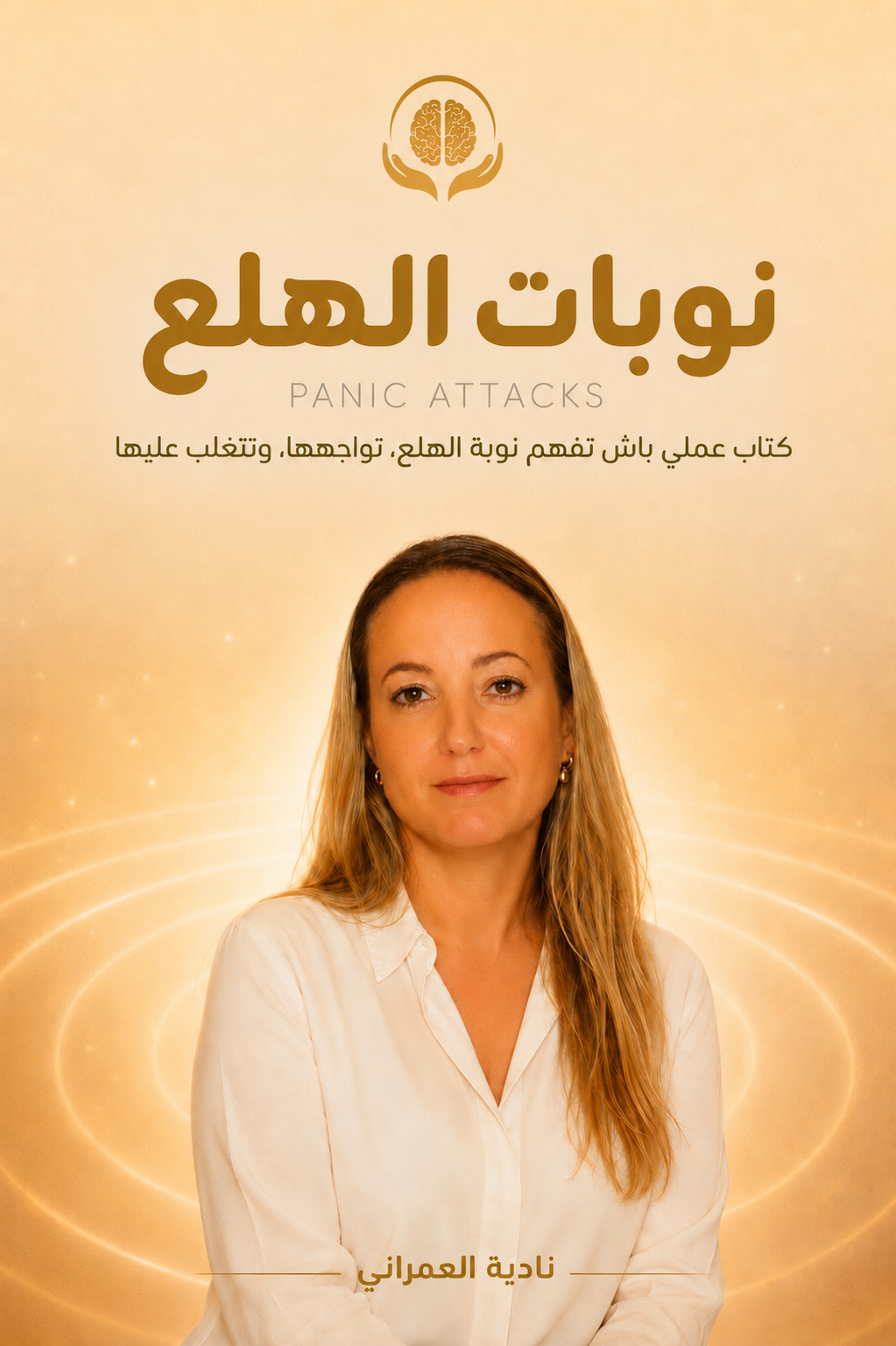
Does this feel familiar?
Your heart suddenly races, you can't catch your breath, you feel dizzy and certain something terrible is about to happen.
Visits to the doctor or the ER, normal test results, and still the fear stays.
Places and situations you now avoid: crowds, driving, travelling, being alone.
A constant fear of the next attack, sometimes heavier than the attack itself.
This is not weakness, and you are not going crazy. It is a cycle that can be understood, and what can be understood can be changed.
Panic is not dangerous. Fearing it is what keeps it alive.
Panic attacks feed on three things: reading bodily sensations as danger, avoidance, and small "safety behaviours" that seem to help but keep the fear in place. This workbook walks you step by step through breaking that cycle, using the same structured methods Nadia uses in her sessions.
A journey in 6 stages
- 1Understanding panic
- 2Thoughts, meaning and fear of fear
- 3Safety, avoidance and observation
- 4Acceptance and direction
- 5Exposure and rebuilding confidence
- 6Integration and maintenance
What's inside
- 01What panic attacks really are
- 02The panic cycle
- 03Why panic keeps coming back
Every chapter ends with practical exercises and a reflection question
The 6-week program
20 to 30 minutes a day, 5 to 6 days a week. Miss a day? Just continue.
Week 1
Understanding and awareness
Week 2
Panic thoughts and interpretations
Week 3
Safety behaviours and observation
Week 4
Acceptance and willingness
Week 5
Structured exposure and confidence
Week 6
Integration and maintenance
This workbook is for you if you:
- experience sudden waves of intense fear or physical symptoms like palpitations, dizziness or shortness of breath
- worry about a physical illness even though your medical tests are normal
- avoid places or situations for fear of an attack
- want practical tools you can apply on your own
- prefer guidance that respects Moroccan culture, in Darija
This workbook is not suitable for:
- severe depression with suicidal thoughts
- untreated trauma with flashbacks
- severe addiction
- physical symptoms that have not yet been medically checked
In these situations, please contact a doctor or professional directly. In an emergency, call your local emergency services.

About Nadia El Amrani
Nadia El Amrani is a licensed psychologist in the Netherlands. She studied Clinical Psychology at the University of Amsterdam, has worked in mental health care since 2014 and in private practice since 2021. Trained in CBT, EMDR, ACT, Schema Therapy and Mindfulness. Guest on "Sbahkom Mabrouk" on Tele Maroc, her awareness content is followed by tens of thousands of people.
What you get
- The complete PDF workbook: 15 chapters in 6 parts, in Moroccan Darija
- A 6-week practice program
- Practical exercises, including the panic cycle, the exposure hierarchy and exposure to bodily sensations
- A personal recovery and relapse-prevention plan
- Instant download, readable on phone and computer
79 MAD in Morocco · 8 € outside Morocco
Pay by card or bank transfer
Frequently asked questions
The first step doesn't take great courage. It only takes starting.
Get my copyThis workbook is educational content and does not replace diagnosis or treatment by a professional. If your symptoms are new or unexplained, see your doctor first. In an emergency, call your local emergency services.